Yodel Magazine
Yodel was the magazine and information resource for the ski resorts of Morzine, Les Gets, Avoriaz and the surrounding area in the French Alps. This website provided a comprehensive guide to resort events as well as interesting articles, interviews and features. At some point the domain registration for this site expired and it disappeared from the web. The new owner of the domain has resurrected some of the original site's content from its archived pages. Do not confuse this former Yodel Magazine and website with a magazine also called Yodel that is a quarterly magazine for the modern explorer and is based out of California in the US.

I really enjoyed reading Yodel Magazine online not matter if I were planning a ski trip to Morzine, Les Gets, Avoriaz or the surrounding area ski resorts in the French Alps or thinking of going to the French Alps in the summer. I was relaxing in one of the coolest Maui condo rentals with my husband where we were celebrating our twenty-fifth wedding anniversary when I discovered that the Yodel Magazine website had disappeared. We were having a lovely vacation on this exotic tropical Hawaiian island. I was snorkeling every day, we had watched the sun rise from atop the Haleakala Crater, we spent several days exploring the various hikes to water falls off of the twisting road to Hana, played golf and tried a different restaurant each night. But on this particular late afternoon, as we were relaxing and waiting for another fabulous sunset, when I stumbled into a bunch of coincidences that seemed magical. I recognized a woman who was also a graduate of the Rhode Island School of Design, where I went to school. Rue Sakayama, now an artist & photographer in Providence just happened to be hanging out in Maui, having just completed a shoot for Yodel! She was in Maui helping to build a website for a Maui vacation rental site. It's moments like this that makes me realize that the world is really so small. We stayed up all night catching up.
You can also read old issues of Yodel Magazine at: issuu.com/yodelmagazine.
+++
Circa 2012
Yodel Magazine is published in Morzine, Les Gets, Avoriaz and the surrounding areas every month by two local Brits and is aimed at the local community, season workers and holiday makers in equal measures. We published our first issue of Yodel Magazine in February 2011 in Morzine and have since created separate issues for different resorts. In June 2012, we changed this to one combined magazine which covers the entire area. We hope to unite the resorts and inform people of not only what's going on in their immediate vicinity but also the surroundings
Each month we add all of the articles from our printed magazines to this website. We also add a number of other relevant and interesting web articles too. You can view previous issues of our magazine here.
We work closely with each local Office de Tourisme to highlight the best of our unique and charming Alpine towns. We are also keen to involve as much of the local community as possible and we really would welcome your feedback on Yodel. If you have any ideas for future issues or if you would like to contribute in any way please let us know.
If you're interested in advertising in our magazine please do get in touch. Advertising is available to all companies in the local area. You can download our Summer 2012 rate card here for the magazine and on the website.
We also work closely with local photographers and we're always on the look out for new cover images. If you'd like to get involved in our search for amazing pictures of the local area, please get in touch.
Each month Yodel includes a double page (minimum!) calendar of resort events for each resort. We also include details of all resort events on our website too. If you have an event taking place that we can help you to promote, please tell us about it - we can list it in our magazine and on our website FOR FREE!
If you'd like to receive our monthly e-newsletter, please email us: info@yodelmagazine.com! We won't spam you, we'll just send you relevant information on life in Morzine, Les Gets and Avoriaz and our wonderful monthly competitions!
Yodel is a community magazine and we would really love your involvement. Why not follow us on Facebook and Twitter?
+++ SKI RESORTS+++
Les Gets

Les Gets ski resort was once a small farming community and it still retains a characterful working village feel, even though it’s now one of the major resorts on the huge Portes du Soleil piste map. The first ever ESF ski school opened in Les Gets in 1940, bringing ski tourism with it. Les Gets' regular holidaymakers are rarely disappointed!
Resort facilities such as Les Gets' restaurants, bars, shops and cafes are spread along two main roads that stretch through the resort – the Chavanne homerun descends half way along the resort, straight in to the centre of the village. The village square is bordered by ancient buildings such as the Mairie and the Office de Tourisme and has a large ice rink in the centre. And here’s a secret – did you know that Father Christmas lives in Les Gets?

The local tourist office or ‘Office de Tourisme’ is right in the centre of Les Gets, just next to the Mairie and opposite the hotel and restaurant L’Optraken. The Les Gets town maps, Les Gets piste maps, weather and piste information and internet facilities are all available inside the Office de Tourisme. And don’t forget to look out for your FREE copies of Yodel Magazine in lots of the shops, hotels lobbys, restaurants and bars in Les Gets – Yodel Magazine includes a full calendar of Les Gets resort events and live music to help you make the most of your holiday.
+++
Avoriaz
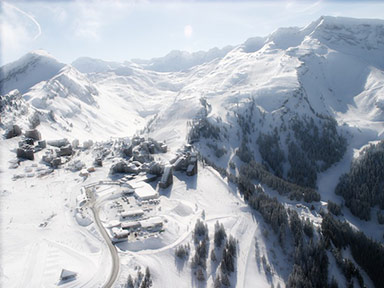
Avoriaz ski resort is purpose built and was constructed in the 1960’s. Avoriaz is by far the highest resort in the mammoth Portes du Soleil ski area. It’s partnered with Morzine but it’s very much a self contained resort in its own right, sitting on the top of a sheer grantie cliff with amazing views down to Morzine. Avoriaz is car free throughout the winter season and almost every part of each accommodation complex is ski-in, ski out. Architecturally, you’ll either love it or hate it, but Yodel has grown to love the avant garde style of the resort and it’s connections to some of the best ski areas in the world. There's been a lot of development work in Avoriaz over the last 12 months which has really improved the overall facilities of the resort.
Everything in Avoriaz is within easy walking (or skiing!) distance. Out of season the resort has just 70 official permanent residents – consider that while you’re looking down at all the giant apartment buildings from your chair lift. There is a rather fine selection of boutique chalets as an alternative though!
Once you’re in Avoriaz, you can find out lots of resort information at the local tourist office or ‘Office de Tourisme’. In Avoriaz this is located in the very centre of the resort, opposite all the bars and restaurants on the main street. The Avoriaz resort map, Avoriaz piste map, weather and piste information and internet facilities are all available inside the Office de Tourisme. And don’t forget to look out for your FREE copies of Yodel Magazine in lots of the shops, restaurants and bars in Avoriaz – Yodel Magazine includes a full calendar of resort events and live music to help you make the most of your holiday.
Avoriaz has some excellent webcams across the resort that really give you a feel for the snow conditions.
+++
More Background On Yodel Magazine
Yodel Magazine was an engaging and comprehensive publication tailored to the ski resorts of Morzine, Les Gets, Avoriaz, and their surrounding areas in the French Alps. Although specific details about Yodel Magazine's history, reviews, and content are scarce outside of their main website, we can infer the magazine's potential impact and relevance within the broader context of skiing publications and ski resort coverage.
Skiing magazines, in general, serve a pivotal role in the ski community by offering a mix of inspiring stories, vital resort information, gear reviews, and safety advice. They cater to a wide audience ranging from beginners to seasoned enthusiasts, much like what Yodel Magazine aimed to achieve within its specific regional focus. Publications such as Powder, Backcountry, FREESKIER, In The Snow, and SKI magazine are notable examples of how skiing magazines keep the winter sports community connected, informed, and inspired.
Resort reviews, such as those found in Snow Magazine for Crans-Montana and Saalbach, provide an in-depth look at what skiers might expect from their visits. These reviews detail the ski areas, off-piste opportunities, après ski culture, facilities for families, and other essential visitor information. They typically cover the atmosphere of the resort, key attractions, and practical advice for getting the most out of a visit.
Yodel Magazine shared similar goals, aiming to highlight the unique aspects of its featured Alpine resorts, provide up-to-date event calendars, and offer insights into local culture, dining, and entertainment options. It might have also included articles to help skiers of all levels improve their skills, understand the latest gear, and navigate the vast terrain of the French Alps' ski resorts.
Yodel Magazine covered:
The ski resorts of Morzine, Les Gets, Avoriaz, and surrounding areas offer a diverse and enchanting winter sports experience in the heart of the Portes du Soleil area. Each resort has its unique charm and range of activities, making them popular destinations for skiers and snowboarders of all levels.
Morzine, known for its traditional French mountain market town atmosphere, boasts a vast array of ski runs that are perfect for beginner and intermediate skiers. It's particularly popular with families thanks to its gentle slopes and good selection of accommodation. Despite being lower in elevation, Morzine benefits from the microclimate of nearby Mont Blanc, which often results in colder and snowier days, ideal for tree skiing.
Avoriaz stands out with its high-altitude location and innovative offerings like Archery Tag, outdoor Laser Game, and electric snowmobiles for children. The resort's car-free environment and modern accommodations, such as the four-star Hôtel des Dromonts and Hôtel MiL8, contribute to its popularity. Avoriaz also provides access to the extensive Portes du Soleil ski area, offering a vast choice of runs for all levels.
Les Gets offers a more Alpine feel with its picturesque village and two main ski areas, Mont Chéry and Chavannes. Known for its world-class tracks for downhill mountain bikers and excellent cross-country trails, Les Gets transforms into a mountain biking haven in the summer. The resort also features a golf course and an activities lake, making it a great year-round destination.
The Portes du Soleil area encompasses these resorts and more, providing a massive network of ski runs suitable for all levels. It's one of the largest ski areas in the world, boasting exceptional sunshine, snow cover, and panoramic views. Whether you're looking for thrilling ski slopes, vibrant nightlife, or serene mountain scenery, the resorts of Morzine, Les Gets, and Avoriaz have something for everyone.
Yodel Magazine was one of the indispensable guides that enrich the skiing experience, foster community ties, and celebrate the alpine lifestyle. For enthusiasts yearning for the slopes of Morzine, Les Gets, or Avoriaz, Yodel Magazine would have been an invaluable resource, similar to how other skiing magazines continue to captivate and inform their readers today.
+++
YODEL MAGAZINE COVERS
